

8 Most Common Shoulder Problems and How to Identify Them Early
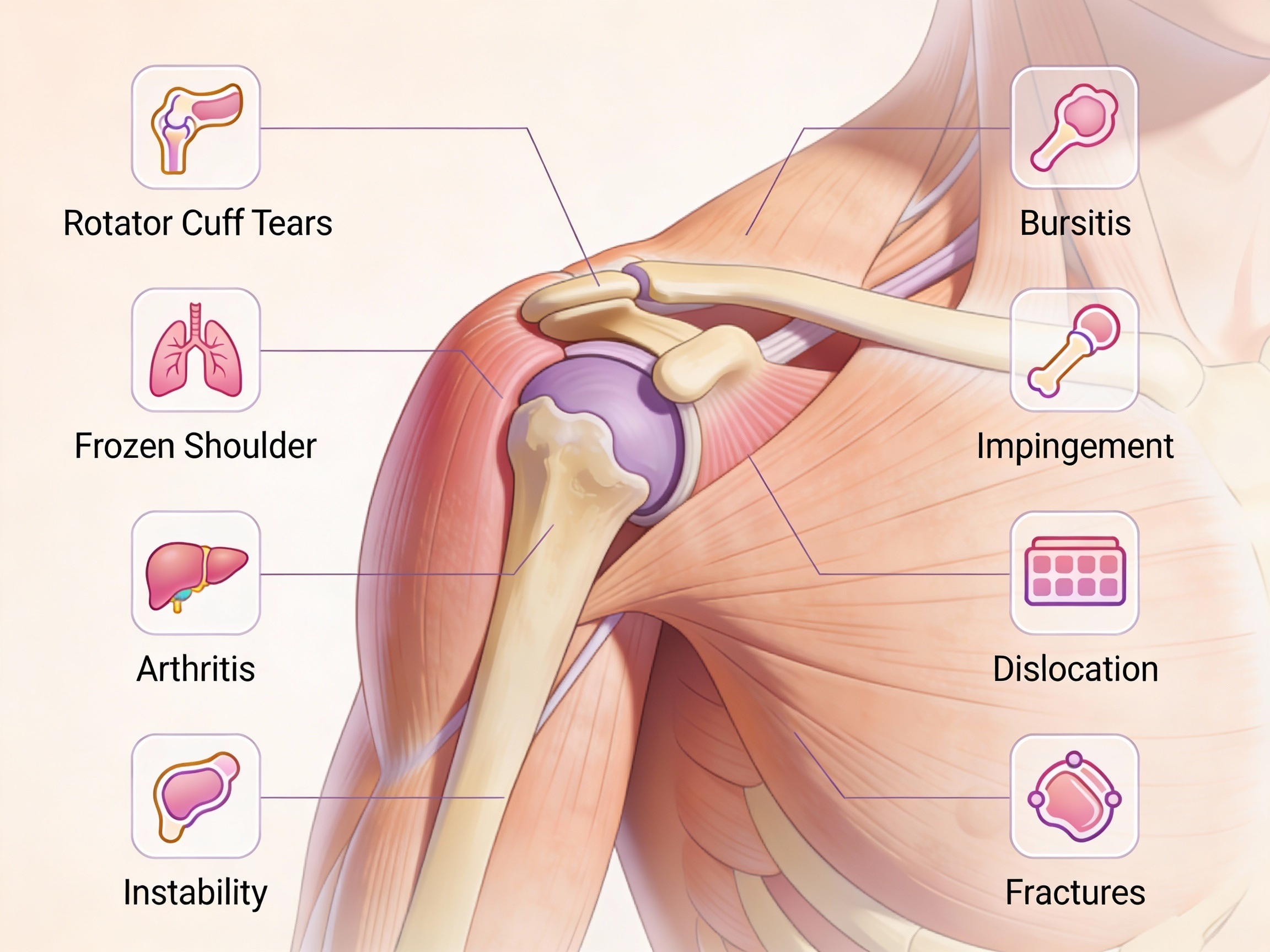
The shoulders are an important part of your body- it is a ball and socket joint- which means it can move freely, rotate and make a lot of actions possible. Since the shoulders are used daily for various tasks without us even noticing them working, they can get affected due to wear and tear, injuries, falls or traumatic events. This can lead to varying degrees of pain and reduced range of motion. Here are the 8 different possibilities when it comes to conditions that can affect your shoulder and cause symptoms like pain, loss of motion, inflammation etc. Let us look at them in greater detail below-
8 Common Shoulder Injuries To Know Of–
Though shoulder pain and stiffness are common symptoms, it is important to pay closer attention to how you injured your shoulder and what condition you may have. Going to a shoulder specialist is the best way you can get a relevant diagnosis and initiate timely treatment.
- Rotator Cuff Tears– If you notice severe pain or weakness when trying to lift your arm above your head, then it is likely a cuff tear. You may also notice a popping sensation and when you lie down on the affected side, the pain gets worse. Painkillers and rest normally tend to work best for this condition if the tear or injury is minimal. More extensive tearing will require shoulder surgery to reattach the torn tendon. Walk into SBJI, for prompt diagnosis and best shoulder surgery in Hyderabad for rotator cuff tear.
- Bursitis– The bursa are fluid filled sacs near joints that help in frictionless movement. When they get inflamed, there is a lot of pain and stiffness. Pain is normally dull but can worsen if you try to lift your arm up. Physical therapy, painkillers and the RICE method are good for treating this condition.
- Frozen Shoulder, also called adhesive capsulitis, is caused when the capsule tissue is no longer flexible and instead covers the joint tightly. You cannot move your shoulder freely in such cases and there may be times when there is thawing or when symptoms seem to get better. Exercises like stretching, painkillers and physical therapy can help with this condition.
- Arthritis of any kind- Joints can get inflamed, painful and cause stiffness and loss of range of motion. Normally associated with advancing age but can also come on quicker, if there is any autoimmune condition involved. Anti-inflammatory medications, massage, ice, heat therapy or even surgery may be necessary in severe cases. Corticosteroid injections are helpful too.
- Shoulder Impingement- This is when a bone spur forms and your bones are not able to move smoothly- causing pain and tenderness in the front of the shoulder. Painkillers, making ergonomic changes to your workplace and at home and getting injections can help, if you don’t want surgery. But, removal of the bone spur may help you feel better soon.
- Dislocated shoulders can cause severe pain and deformity of the shoulder joint. A reduction is done- where the bone is put back into its socket. You will then need to rest, use a sling and go in for physical therapy.
- Shoulder instability- When your shoulder feels dead or like it may pop out of its socket. Physical therapy and rest are essential. Physical therapy is good to strengthen surrounding muscles while surgery may be needed in severe cases.
- Fractures– When the bone gets broken or cracked, it can cause severe pain, inflammation and other symptoms. Using a sling to immobilise the bone and resting can help if it is minor. Major or complex fractures will involve surgery to help the bones heal.
Conclusion– At SBJI, we have some of the best specialists in the field of orthopaedic medicine and surgery. You are guaranteed to get affordable shoulder arthroscopy surgery in Hyderabad, if your injuries are more severe and just medication or rest won’t do. The shoulder joint is a very important one that is constantly in use and if you don’t get help right away, you risk long term injury and associated issues like stiffness, poor range of motion and pain, which can impact quality of life negatively. So, don’t waste any time overthinking and call us to schedule a consultation!
Frequently Asked Questions
Early signs include shoulder pain during lifting, reaching or lying on the affected side. You may notice weakness when raising the arm and a catching or grating sensation during movement.
Impingement causes sharp pain when lifting the arm above shoulder height. Reaching behind the back or putting on clothes may feel painful. The shoulder may feel stiff after rest and ease once you move it gently.
A frozen shoulder causes gradual loss of movement in all directions. Pain can be constant, with a dull ache deep in the joint. Everyday tasks such as dressing, reaching or fastening a seatbelt become difficult.
Early arthritis presents as stiffness after rest, mild pain during activity and occasional grinding in the joint. Over time, overhead movements may feel limited and the shoulder may swell after heavier use.
Instability creates a feeling that the shoulder may slip or pop out during movement. You may experience pain during overhead or outward-reaching actions and occasional clicking. Previous dislocations increase the chance of early instability symptoms.