

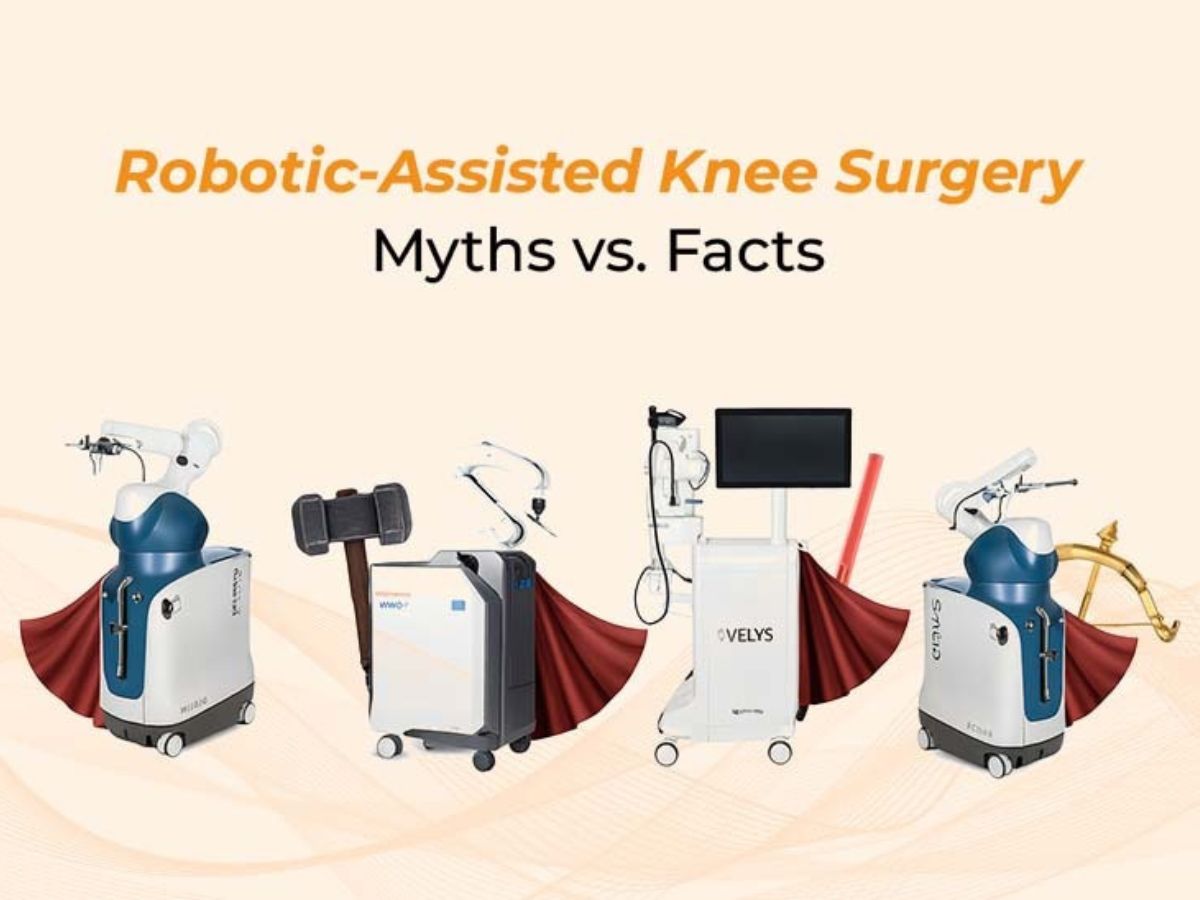
Robotic-Assisted Knee Surgery: Myths vs. Facts
Knee joint pain can be caused due to various reasons, ranging from physical damage to degenerative diseases like osteoarthritis and rheumatoid arthritis. Severe injury or any long term deformity of this crucial joint can impact daily quality of life greatly. In 2022 alone, more than 2.5 lakh individuals underwent total knee replacement surgery in India. This number continues to rise with every passing year, as people wish to be independent and mobile for as long as possible. Robotic knee replacement surgeries are minimally invasive. Better medical technology, technique and infrastructure translate to positive surgical outcomes and the ability to lead a sustainable life thereafter.
What Is Robotic Knee Replacement Surgery?
This is a surgical technique that utilises a robotic arm guided by a surgeon for the removal of damaged knee tissue, followed by its replacement with an artificial joint with greater precision- for better alignment and a more natural feeling joint in the end.
Steps Included In Planning Of The Surgery:
Various imaging techniques like CT and MRI scans are used to create a 3D model of a patient’s knee. This is used as a map of sorts and the approach needed for the procedure, along with location of the incision is decided using this information.
The robotic arm cuts the bone meticulously for the alignment of new knee components, by loading patients’ real time data. Feedback is provided to the system for greater accuracy.
Even though the robotic arm is utilised for the procedure, it is under the surgeon’s control and cannot act on its own. The robot hence assists the surgeon in coming up with a personalised treatment plan, as each person has a different anatomy, even if the components remain the same.
Benefits Of Robotic Surgery Over Traditional Surgery:
Robotic surgery makes more precise bone cuts and implant alignments of new joint components. This gives more optimal and natural movement to the knee. This surgery is minimally invasive which results in less trauma or injury to the surrounding tissues and requires shorter hospital stays, causes less pain and ensures quicker recovery.
Some Myths And Facts About Robotic Knee Replacement:
Myth #1: Robotic knee surgery is only done by a robot.
Fact: Wrong! A robotic arm is used during the procedure while the whole process and the instrument itself is under control of the surgeon. Think of it as an advanced guiding system and a great assistant who is very steady and won’t get distracted!
Myth #2: Robotic surgery is risky.
Fact: No. Robotic surgery is way less risky and more precise, offering greater alignment and more personalisation of treatment plans. It is safer than traditional surgery as it avoids unnecessary trauma to surrounding tissues.
Myth #3: Recovery time is similar to traditional or conventional methods.
Fact: As robotic surgery is minimally invasive, it avoids unnecessary trauma to surrounding tissues that can directly mean less pain and swelling, leading to quicker recovery of the individual
Myth #4: Robotic knee surgery can only be tolerated by younger individuals or is useful for complex cases only.
Fact: This technique is safe for all ages. Individuals with complex deformities, implants and prior surgeries can also undergo this procedure.
Myth#5: Robotic surgery can cause severe blood loss.
Fact: The method is minimally invasive, possessing marginal blood loss due to smaller incisions and reduces surrounding tissue damage which can help the patient to recover faster with less pain.
Conclusion – Accuracy in the procedure, personalized treatment plans for individuals, less pain and complications are major benefits associated with this procedure while higher costs, limited availability, longer surgical duration and requirement of specialised training are few setbacks. In cases with severe bone loss, extreme obesity and complex deformities, these surgeries cannot be performed. Overall, it helps in improved radiological outcomes, accurate prosthesis placements and joint alignment – factors that can greatly influence how you will move for the next few decades to come, if you decide to get the procedure done.
Frequently Asked Questions
Any surgery bears a certain amount of risks, even though robotic knee replacement surgical risks are minimal. Some common risks include infection at surgical site, temporary stiffness and swelling, blood clots and rarely, implant related complications.
Patients with severe arthritis, degenerative knee conditions like advanced osteoarthritis, rheumatoid arthritis, post traumatic arthritis etc. with significant pain and no relief through traditional medications are suitable; Doctors also consider their overall health, bone quality and level of joint damage, before deciding on which method to go for.
Robotic knee replacement is highly precise through a personalized 3D plan that helps in better alignment and implant placement, with minor soft tissue damage and precise bone cuts.
Yes, after a robotic knee replacement, the individual must focus on rehabilitation, physical activity management and overall health maintenance to ensure the longevity of the implant.
A full-fledged recovery after a robotic knee replacement generally takes 3 to 6 months, while many patients can resume their daily activities after 4 to 6 weeks post surgery. Walking or moving around soon after the procedure can greatly help improve outcomes.