
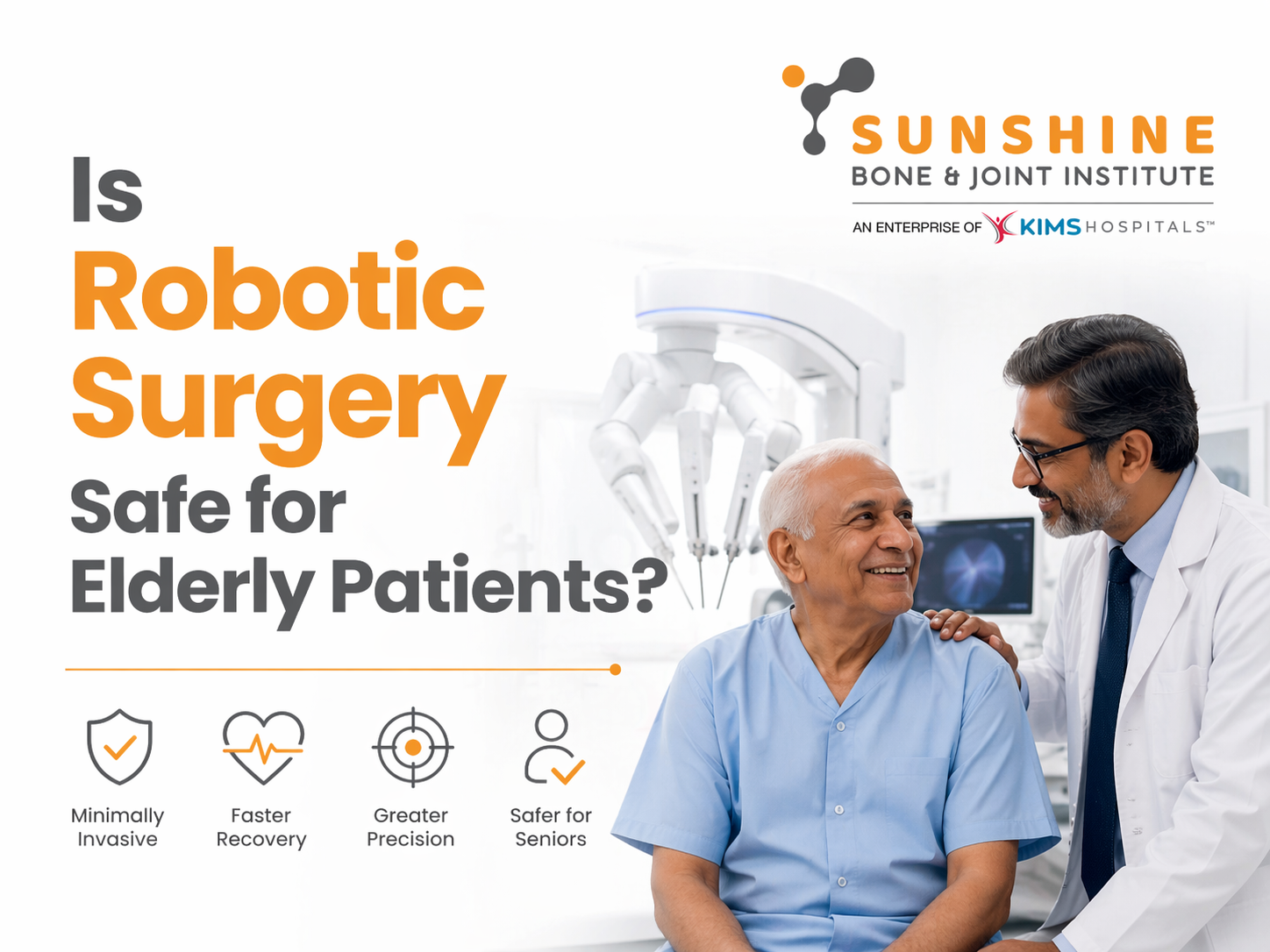
Is Robotic Surgery Safe for Elderly Patients?
Life expectancy has gone up dramatically the last few decades- which means people don’t just live longer, they tend to develop and deal with chronic conditions for many years of their lives. Worn down joints are not just a small problem- they may seem subtle at first but they only get worse as you grow older. If you suffer from severe joint pain and medications and treatments are not helping you, don’t give up. Call our specialists at SBJI Hospital, as we provide the best Robotic Hip Replacement In Hyderabad, and all other procedures, once it is known that surgery is necessary for you to get better.
What is Robotic Surgery in Elderly Patients?
Robotic surgery is a type of surgical technique that uses a robotic arm that is controlled by a highly experienced surgeon. This arm is like a very precise assistant to the surgeon and helps in generating very detailed 3D models of the affected joint- so that the doctor knows exactly what to expect, much before the first incision.
The arm also keeps providing real time feedback, once the procedure has started – so that proper bone cuts and accurate implant placement can be done. The surgeon moves the arm while watching the surgical field on a screen and makes cuts accordingly. Since the incisions are smaller, there is lesser disturbance to surrounding soft tissue. This is much better – as older individuals are already fragile and will take longer than usual to heal.
Advantages of Opting for Robotic Orthopedic Surgery in Older Patients-
If you need surgery and have been searching for ‘Robotic Hip Replacement Surgery Near Me’ or ‘Robotic Surgery in Elderly Patients’ online, then it makes sense to learn more about the advantages of getting this procedure done at SBJI Hospital-
- Since the procedure is minimally invasive, you will have very minimal blood loss, smaller incisions mean scars that are not as visible and the use of specialised instruments means there is less manipulation of surrounding tissue- all of these translate to quicker receiver, lesser inflammation and swelling and lesser levels of discomfort overall.
- Infection risk is very minimal- Since there are no large open wounds or many stitches, lower infection risk is a huge plus, as older individuals may have poorer immunity than usual.
- While doctors ask you for your age, they will also look at your health parameters in great detail- they will check cardiac function, lung function, presence of chronic conditions like arthritis, diabetes, hypertension, how well you may react to anesthesia, present mobility and strength and take into account what your future expectations are, while deciding which procedure is the best option for you.
- You will mostly be asked to walk or move around the same day after surgery- and this reduces the risk of developing clots or pneumonia. Painkillers are used to help you manage symptoms and you can slowly begin rehabilitation and physical therapy.
Robotic surgery is mostly a great option to consider if you don’t have major anatomical issues, the issue is highly localised and other underlying conditions which may make recovery harder are well under control.
So, call us at SBJI Hospital to understand more about your condition and learn which type of joint replacement may be the best option for you. You will need proper treatment and ignoring that chronic pain is not going to make it go away. Schedule an appointment today!
Frequently Asked Questions
Robotic surgery is considered safe for elderly patients when performed after thorough medical evaluation. It uses precise, minimally invasive techniques that reduce tissue damage. Suitability depends on overall health, existing medical conditions, and surgical risk assessment. Careful patient selection ensures safety and supports better surgical outcomes in older adults.
Robotic surgery offers smaller incisions, reduced blood loss, and lower risk of infection compared to open surgery. These factors contribute to faster recovery, less postoperative pain, and shorter hospital stays. Improved precision allows surgeons to operate effectively while minimising strain on the patient’s body.
Risks include complications related to anaesthesia, bleeding, infection, and pre-existing medical conditions such as heart or lung disease. Elderly patients may have reduced physiological reserve, which can affect recovery. Comprehensive preoperative evaluation and monitoring help manage these risks and guide appropriate surgical planning.
Eligibility is based on detailed assessment of medical history, physical fitness, organ function, and the nature of the condition requiring surgery. Doctors evaluate cardiovascular health, lung capacity, and medication use. This evaluation ensures that the benefits of robotic surgery outweigh potential risks for the individual patient.
Robotic surgery can improve recovery time due to reduced surgical trauma and smaller incisions. Patients often regain mobility earlier and experience fewer complications during recovery. Structured postoperative care and rehabilitation further support healing and help elderly patients return to daily activities more efficiently.