

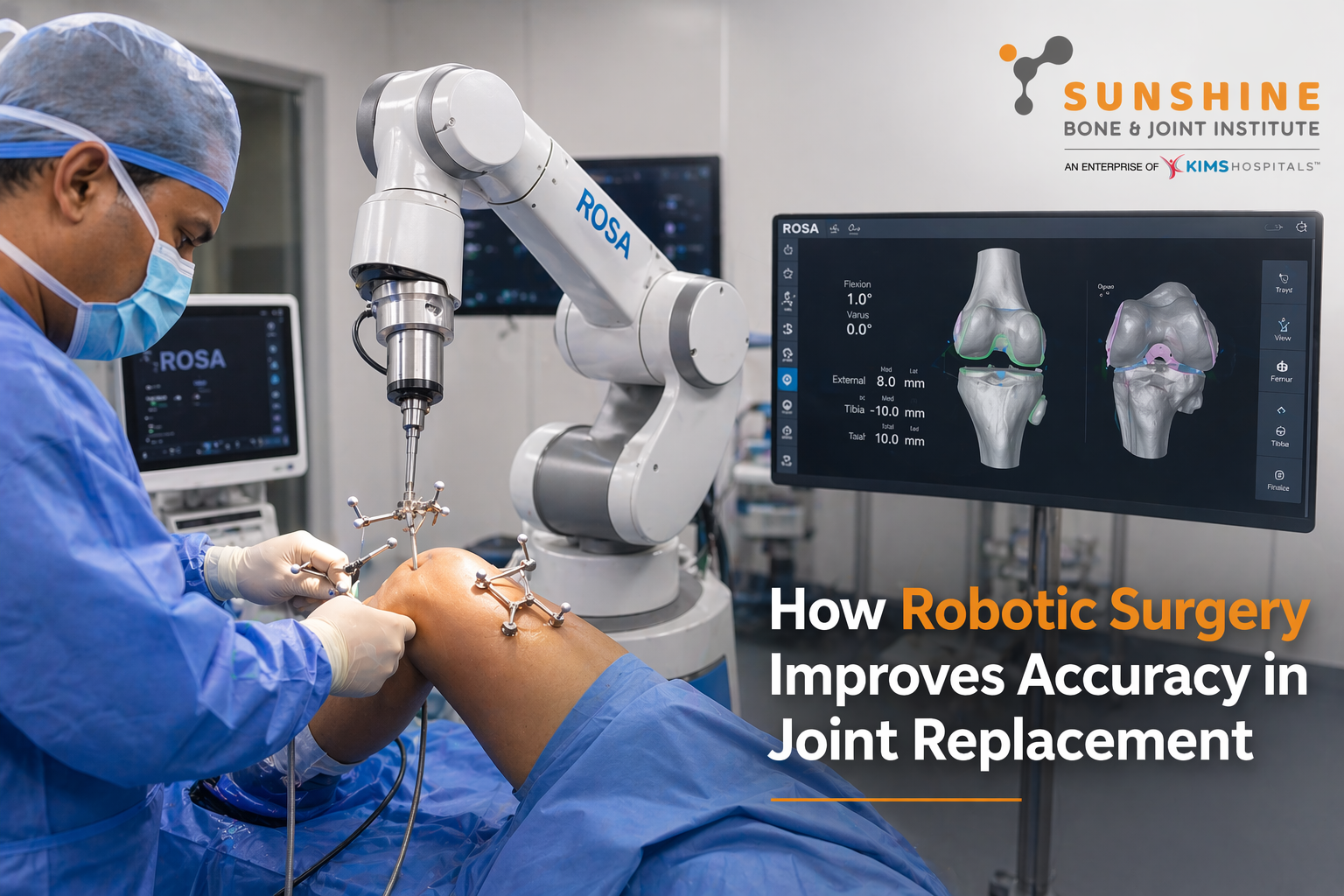
How Robotic Surgery Improves Accuracy in Joint Replacement
Your joints work very hard all day and continue to do so for many years. So, it is natural for them to get worn down or damaged over a long time. But, what happens when the wear and tear is too much to deal with- when every decision you need to take about your routine is dictated by chronic pain that refuses to go away? What can you do when none of the conservative methods of treatment work for you? You will need to talk to an experienced orthopedic doctor and consider getting hip replacement in Hyderabad.
Call us at +91 8008 102 103 today!
What is Robotics in Joint Replacement Surgery?
A robotic arm is used by surgeons during the procedure. The arm first makes a detailed true-to-anatomy model of the hip using several high resolution CT scan images. This gives the surgeon a good idea of what to expect with respect to anatomical quirks, how much bone needs to be taken out, where the prosthetic implant has to be placed and to improve accuracy and precision overall. The robotic arm also moves within a designated area only, minimising damage to surrounding soft tissue.
One of the major plus points is even during surgery, the surgeon can get real time feedback about where to make adjustments with respect to incision size, bone cuts and other important information, instead of having to work with just the initial image.
Benefits of Getting Robotic Hip Replacement in Hyderabad-
These are some of the benefits you can expect, when you choose to use robotics in joint replacement surgery-
- Exceptional surgical precision- Bone cuts and positioning of implant parts are done extremely accurately, with the help of the robotic arm. This means your joint will feel more natural to walk or move around with, once you heal.
- Personalised surgical plan- Everyone has the same bones but each person’s anatomy is different. With proper 3D modelling of the hip, the surgeon gets a good idea of where to cut bone, how much damage is present and also work on placing the implant in the right orientation, so that the prosthetic is useful for many years to come.
- Minimally Invasive Surgical Technique- Robotic arm helps in using a minimally invasive approach- smaller incisions are made, specialized instruments are inserted via those cuts, so surrounding tissues don’t get disturbed. This means less swelling and inflammation and quicker recovery. There is an added plus of not having to worry too much about the area getting infected, if proper hygiene is practiced.
- Minimal blood loss- Smaller incisions mean small scars, very low blood loss and better recovery post-surgery. This translates to a shorter hospital stay and you can get back to your routine much sooner rather than later.
- Better Joint Durability and Life- When implants are placed accurately, they don’t get worn down as much, which means their durability also is high.
When you opt for hip replacement surgery, you should talk to our experienced surgeons at SBJI Hospital, as we are the best hip replacement hospital in Hyderabad. Our specialists deliver consistently stellar outcomes, as we guarantee a safe surgical experience. We also make sure to help you recover with rehab and therapy – so that you can continue to live independently for many more years to come.
So, if you have any joint or bone related problem, please don’t hesitate to call us today!
Frequently Asked Questions
Robotic surgery uses computer-guided systems to assist surgeons in planning and executing joint replacement procedures with high precision. Preoperative imaging creates a 3D model of the joint, allowing exact implant positioning. Real-time feedback during surgery helps maintain alignment, reducing the risk of errors and improving overall surgical accuracy.
Imaging such as CT scans or intraoperative mapping provides detailed information about bone structure and joint alignment. This data is used to create a customised surgical plan. Accurate imaging ensures precise bone preparation and implant placement, which directly affects joint function, stability, and long-term durability of the replacement.
Robotic systems assist in achieving accurate alignment by guiding bone cuts and implant positioning according to a preplanned model. This reduces the likelihood of improper placement, which can lead to uneven wear or joint instability. Improved alignment supports better function and reduces the risk of revision surgery.
Robotic-assisted surgery improves outcomes by enhancing precision, reducing tissue damage, and supporting consistent surgical execution. Patients benefit from improved joint function, reduced pain, and faster recovery. Accurate implant positioning also contributes to longer implant lifespan and lower complication rates following joint replacement procedures.
Robotic surgery is not fully automated. The surgeon controls the procedure while the robotic system provides guidance, precision and real-time data. The technology assists in executing the surgical plan accurately, but clinical decisions and movements remain under the direct control of the operating surgeon throughout the procedure.