

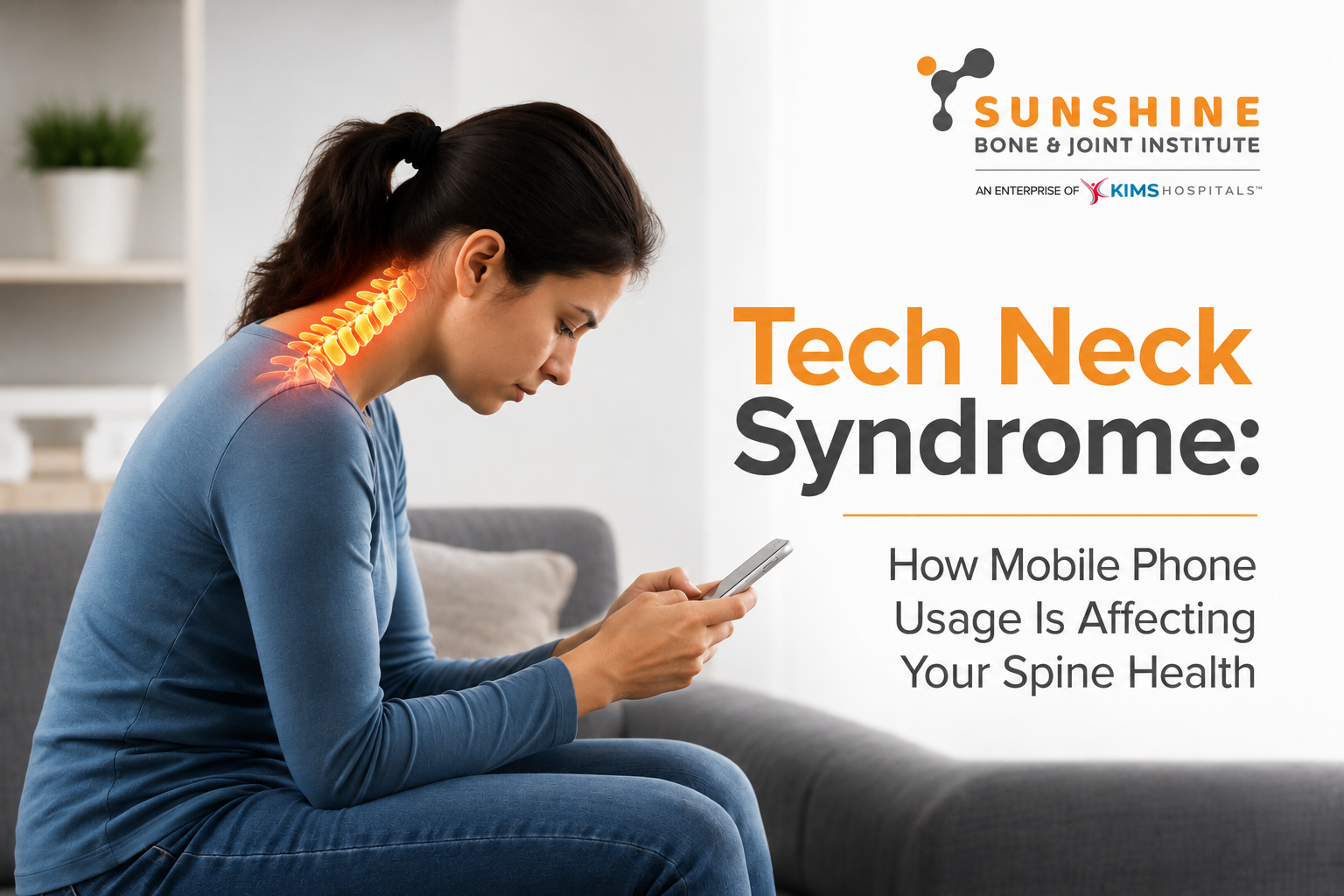
Tech Neck Syndrome: How Mobile Phone Usage Is Affecting Your Spine Health
Most of us spend hours on our phones, laptops and other objects that have a screen and practically live out our lives online. While this habit has become a necessity because of convenience linked to everything available at our fingertips, the neck, upper spine and shoulders are the parts that are heavily affected- due to the constant bending or tilting, however subtle the motion may be. This chronic tilting leads to an issue that is now dubbed tech neck syndrome.
You will need to opt for specialised treatment by a Spine Specialist in Hyderabad at the best orthopedic hospital in Hyderabad- SBJI Hospital.
Why Is Tech Neck Syndrome Bad For You?
There are ligaments, muscles, joints and other structures at the neck that support your head and these have to work extra hard when you tilt or bend your head often.
As a result, your neck may begin to feel stiff, tired and get worse with a long working day.
The cervical spine’s alignment gets messed up with the constant forward bending.
The muscles in the shoulder and upper back are perpetually working, which means they will feel knotted or overly stiff.
Even though you are bending your head, it is always in one particular way and that means you will lose flexibility with other regular motions that will need your head to move from one side to another or however else.
You may have severe chronic pain that refuses to go away and this can affect your quality of life slowly.
Causes of Tech Neck-
Some well known causes that may lead to you getting Tech Neck Treatment in Hyderabad include-
Using your phone through the day – changes in the neck flexion angle leads to mild to severe neck disability.
Not having an ergonomic setup- If your desk is at the wrong height and the laptop is placed too high or too low, then your muscles, joints and the spine need to overcompensate for you to be able to work. You begin to slouch because that is convenient and that can alter posture in the long term enough, to cause persistent muscle fatigue.
Sedentary lifestyles mean there is no physical activity and that leads to loss of muscle conditioning and pain or stiffness of the spine.
Many people just continue scrolling their phones or use their computers or laptops while hunched, or keep the laptop on their knees to work- or work in a myriad of positions but all of these can place additional strain on the spine, as they begin to slouch or have poor postural awareness.
Symptoms of Tech Neck Syndrome-
The most common symptoms people report include neck and shoulder stiffness, pain, shoulder tension, headaches, poorer flexibility and reduced mobility of the neck and head.
When your symptoms are chronic, you will need to visit an experienced Neck Pain Specialist in Hyderabad at SBJI Hospital right away.
Exercises To Keep Tech Neck Away-
The following exercises are designed to help reduce tension and improve flexibility. Examples include-
Chin tucks- where you sit or stand with your shoulders relaxed first. Then you pull the chin backwards, without tilting the head.
Neck side stretches- Tilt your head to one shoulder slowly and hold for a few seconds. Then repeat on the other side.
Shoulder blade squeezes– You have to squeeze your shoulder blades together to improve shoulder stability.
Chest opening stretches and taking breaks from your screen every 20-30 minutes. This is good for your eyes as well.
Conclusion– Please talk to us if your symptoms are severe or you are in chronic discomfort by the end of a long working day. You will need simple Cervical Spine Treatment Hyderabad, Neck Pain Treatment Hyderabad or others for your specific symptoms, based on how severe they are.
Experienced specialists at the best Orthopedic Hospital In Hyderabad are available at SBJI Hospital, so please call us at +91 8008102103 without fail.
Frequently Asked Questions
Tech Neck Syndrome refers to neck pain and stiffness caused by prolonged use of mobile phones, tablets, and computers with the head bent forward. This posture increases stress on the cervical spine, muscles, and ligaments, leading to discomfort and reduced neck mobility.
Common symptoms include neck pain, shoulder stiffness, upper back pain, headaches, muscle tightness, and reduced range of motion. Some people also experience tingling, numbness, or pain radiating into the arms if nearby nerves become compressed.
Prolonged forward head posture places repeated strain on the cervical spine and surrounding muscles. Over time, this can contribute to muscle fatigue, poor posture, joint stress, and increased wear on the structures of the neck, resulting in persistent pain and stiffness.
Hold your phone at eye level, avoid looking down for prolonged periods, take regular breaks, maintain good sitting posture, and perform stretching and strengthening exercises for the neck and shoulders. An ergonomic workstation also helps reduce strain during screen use.
Consult an orthopedic or spine specialist if neck pain persists, interferes with daily activities, or is accompanied by arm pain, numbness, weakness, or frequent headaches. Early evaluation helps identify the cause and prevents symptoms from becoming more severe.