

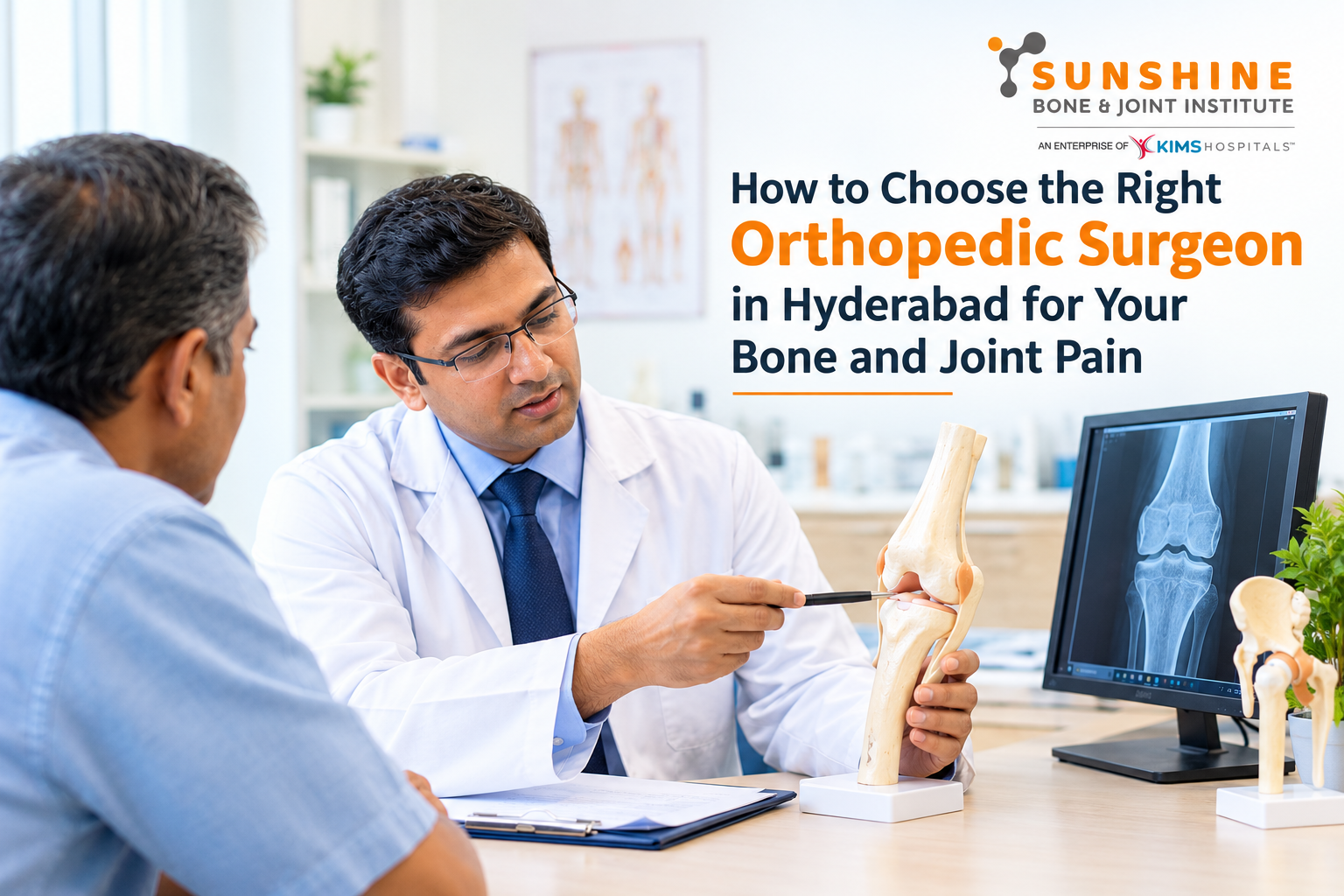
How to Choose the Right Orthopaedic Surgeon in Hyderabad for Your Bone and Joint Pain
Most of us don’t rush to see a doctor the first time a knee aches or a shoulder feels stiff. We blame it on a long day, an uncomfortable sleeping position or perhaps a little too much physical exertion. We tell ourselves a little rest and a nightcap will resolve it.
But what happens when it does not?
When pain goes from a nag to an issue that interferes with your daily routine, that’s when you know you can’t put off that long-pending visit to the orthopaedic specialist. And while you may have access to the best orthopaedic surgeon in Hyderabad, finding the right doctor for your condition will require a little more effort.
Here are the 5 things to consider before booking that appointment.
1. Identify a Specialist Who Understands Your Specific Problem
Before you rush to book an appointment, take time to understand where the doctor’s expertise lies. Orthopaedics is a very vast subject, and you would be surprised by the number of specialities that fall under it.
For example, a well-lauded surgeon in the city for knee replacements may not be the ideal person to consult for a complicated shoulder injury. If you’re unsure about the nature of your problem, starting with a general orthopaedic specialist is perfectly reasonable as well.
2. Experience Matters, but There’s More to It
Is a surgeon with 25 years of experience automatically better than someone with a mere 10? Not always. Experience alone will not tell you much about how skilled they are at treating your particular condition.
Check their qualifications, certifications, and additional training, and look into the kinds of cases they regularly handle. Recommendations from friends or family could be particularly helpful, as they are from more reliable sources with firsthand experiences.
And if at all surgery is being discussed, do not hesitate to ask how frequently the surgeon performs that specific procedure and the suggested downtime. It’s a fair question and one definitely worth asking.
3. A Good Consultation Should Leave You With Answers, Not More Questions
Have you ever experienced walking out of a doctor’s appointment feeling more confused than when you walked in?
Especially when you are already worried about your health and were hoping the doctor would provide the answers you were looking for.
A good orthopaedic consultation is not just a simple glance at your scans but a detailed discussion regarding your symptoms, a thorough examination, and eventually arriving at the right diagnosis.
4. Surgery Shouldn’t Be the Only Conversation
There’s a common misconception that visiting an orthopaedic surgeon inevitably leads to you being wheeled off to the operation theatre for surgery. But reality is far from that, thankfully.
Most of the bone and joint problems can be treated through physiotherapy, medication, exercise, lifestyle changes or other non-surgical treatments.
If you are uncertain about a major procedure and want to try a less invasive procedure, seeking a second opinion is an option.
5. Think About The Holistic Experience
Choosing the right hospital and facilities is just as important as the right doctor. If you want to go the non-invasive route, then is the doctor consulting in a hospital that has physiotherapy and rehabilitation services? And what is the proximity to your house like? If your physiotherapy sessions are thrice a week, it is very cumbersome to travel 60 minutes every time.
What would insurance coverage look like, and does it fall under your network of hospitals?
These details become particularly important after procedures such as joint replacement or fracture surgery.
After all, recovery takes time, and having the right support just makes the process a lot easier to manage.
Conclusion
Finding the right orthopaedic surgeon in Hyderabad isn’t really that hard once you have these 5 basic conditions in place. It’s not necessarily about choosing the ‘doctor of the stars’ or the hospital with the most impressive facilities. It is about finding that one specialist with the most relevant experience, who listens to your concerns and explains your treatment choices without rushing you into any decision.
Frequently Asked Questions
Consultation fees depend on various factors, namely the doctor’s experience, their field of specialisation and the hospital or clinic you visit. Senior consultants at large hospitals generally charge more than doctors at smaller clinics, so it’s always better to find out about the fees involved beforehand.
If a doctor has specifically advised you to get one, then yes. But in most cases, the doctor will determine which scans to take after a thorough physical examination and discussion of the symptoms.
Not necessarily. Robotic-assisted surgeries do offer great precision, especially for certain procedures like joint replacements. But it can never replace a surgeon’s experience and their holistic knowledge of your condition.
Orthopaedic doctors treat conditions involving bones, joints, muscles and injuries, including those requiring surgery. Rheumatologists’ area of expertise lies in inflammatory and autoimmune conditions such as rheumatoid arthritis and lupus. The patient’s symptoms and diagnosis help determine which specialist is the right fit.
Many health insurance policies cover medically necessary procedures, including certain fractures and joint replacements. However, coverage depends on your policy, waiting periods, exclusions and hospital network. Before scheduling surgery, finish your pre-authorisation and check with your insurer about cashless treatment availability and other expenses that you may need to pay yourself.