

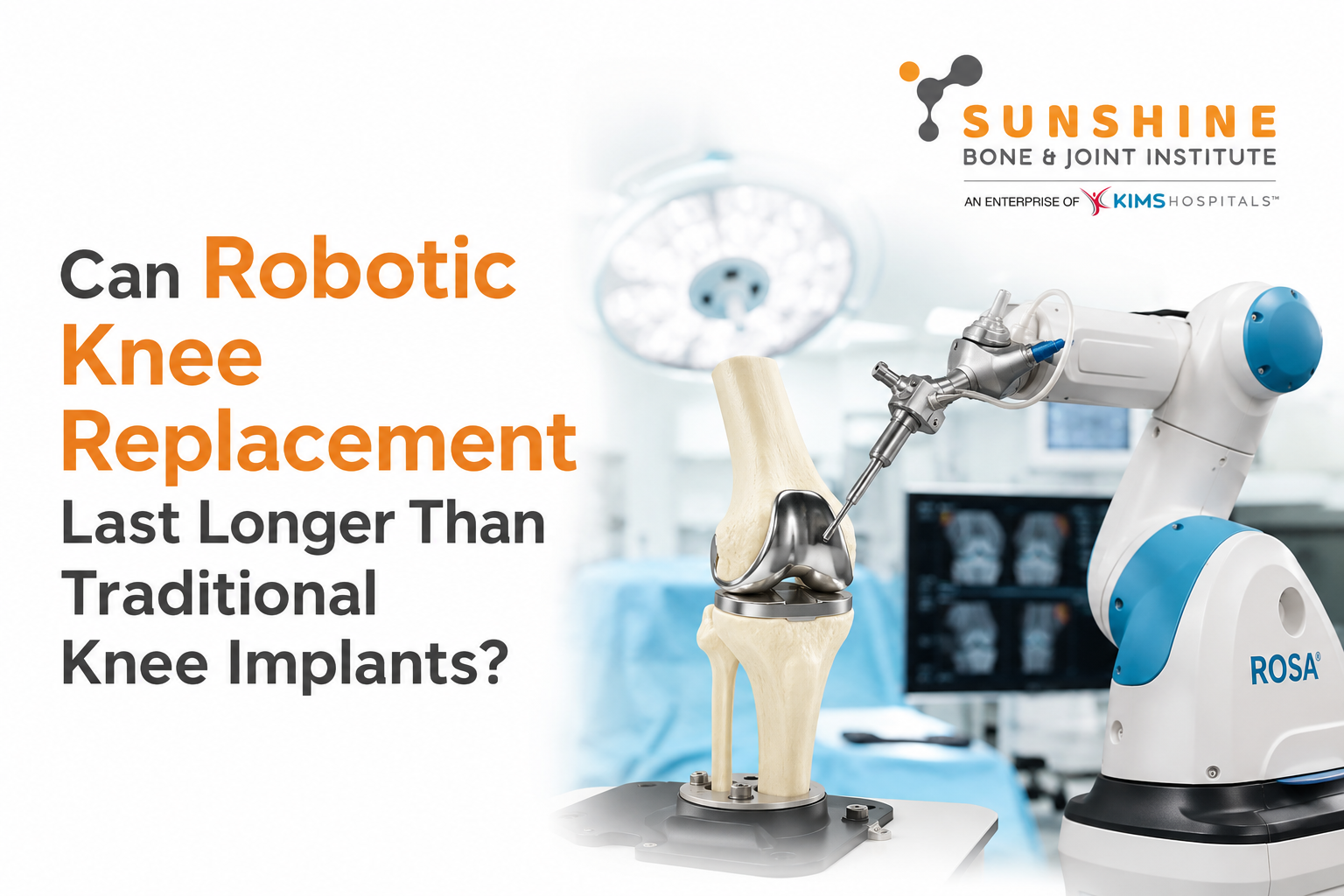
Can Robotic Knee Replacement Last Longer Than Traditional Knee Implants?
The need for knee replacement surgery has increased dramatically in the last decade or so, for the simple reason that people are living longer and refuse to just go about their lives in pain. That is exactly what knee replacement can give you – better movement, greater independence and pain free days after recovery. The decision to opt for manual replacement or robotic knee surgery in Hyderabad depends on factors like your overall health, future expectations, severity of symptoms and how localised the joint damage is, among others.
Now, let us see how robotic knee replacement in Hyderabad is better than manual surgery and understand if such robotic implants outlast their manual prosthetic counterparts.
Robotic Vs. Manual Joint Replacement- Which is Better In Terms of Joint Longevity?
Conventional or manual knee replacement surgery has been around for decades, so there have been plenty of opportunities to study the long term wear and tear of the implants and how they function after 5, 10, 15 or even 20 years of surgery. However, robotic surgery is a relatively new type of procedure – and the only reason people are not sure about how well or long their implants will function- is because most people have had surgeries very recently, from the last decade or so in India.
Infact, the very first surgery in India was performed in Pune in 2017. The implant is hence less than a decade old, but that is not to say that manually placed implants are better than robotic knee replacement surgery unilaterally. Let’s give it time and we can then decide!
Advantages of Getting Robotic Knee Surgery-
Let us look at the advantages in greater detail below-
- The surgeon can plan the whole surgery much better than ever – even before the initial incision is made, because a robotic arm has made construction of a realistic 3D model of the joint possible. This is done using high resolution CT scans that are obtained in the beginning. This leads to effective surgical planning.
- Minimally invasive- The incisions made on the skin are very small, as specialized instruments are slid into the knee joint to help cut the bone, remove pieces of bone and place the implant as accurately as possible- so that the joint will feel natural to use later on. This also has the added advantage of improving joint life in the long run.
- The robotic arm works within a tight boundary and does not manipulate surrounding tissue, so this means there is lesser inflammation and pain or swelling. Small cuts also mean less bleeding or associated complications.
- Studies have definitively shown that people spend less time in the hospital and go home sooner with robotic joint replacement in Hyderabad. They recover faster too, provided they stick to what their doctor says.
Conclusion– Asking if robotic implants can outlast their manually inserted counterparts is a valid question- but may not be the right one for now. This understanding comes with long term studies that are conducted after surgery is done, where patients are checked on every few years to assess joint health and mobility.
Such studies can be done only when more people opt for robotic surgery. If you would like to learn more about Advanced Knee Replacement Technology in Hyderabad, please walk in to SBJI today and talk to our specialists!
We will help you before, during and after the surgery gets done, assist you with physiotherapy and recovery – so you can be as independent as you desire. Call us today to help banish chronic pain and discomfort.
Frequently Asked Questions
Robotic knee replacement uses advanced imaging and computer-guided technology to create a personalized surgical plan. This allows surgeons to position the implant with greater precision, helping achieve better alignment and balance within the joint. Accurate placement can reduce uneven wear on implant components and support long-term knee function.
Robotic-assisted surgery aims to improve implant alignment and joint mechanics, factors that influence implant longevity. By reducing positioning errors and optimising load distribution across the knee, robotic technology may help minimise implant wear over time. Long-term outcomes also depend on patient activity levels, weight management, and overall joint health.
In most cases, robotic knee replacement uses the same implant designs used in conventional knee replacement surgery. The primary difference lies in the surgical technique. Robotic assistance helps surgeons place and align the implant more accurately, which may improve function, stability, and the long-term performance of the implant.
Several factors influence implant longevity, including surgical accuracy, implant design, bone quality, body weight, activity level, and adherence to rehabilitation. Proper alignment and balanced joint movement help reduce stress on the implant. Maintaining a healthy lifestyle and following medical advice can also contribute to longer-lasting results.
Accurate implant positioning and improved joint balance may reduce complications associated with implant wear, instability, and malalignment. These factors are common reasons for revision surgery. While no procedure can eliminate the need for future surgery, robotic-assisted knee replacement is designed to optimise surgical precision and support durable outcomes.