

Everything You Need to Know About Knee Replacement Surgery
The knees are important joints that help keep you stable while you move around, while also carrying your entire weight. This means this joint is much more prone to wear and tear and related injuries, when compared to others. When the knee joint is severely worn down and you have chronic pain which affects your quality of life, you will be asked to consider painkillers and conventional modes of treatment. When they fail to work, knee surgery is recommended and can be very helpful in most cases by restoring joint function, movement and independence in general. Read on to understand more about getting knee replacement surgery in Hyderabad.
When is Knee Replacement Surgery Recommended?
Arthritis and severe wear and tear due to advancing age is the number one reason for needing knee replacement. When medications, injections and physiotherapy together offer no relief, opting for knee replacement surgery may be the best way out of the chronic pain and poor joint function. Even when you opt for surgery, the doctor will have to check if you will require a partial or total knee replacement. Partial, like the name suggests is the removal of some parts of the knee joint and new prosthetic parts are added in. Total means the complete knee joint is removed and replaced with prosthetic implants made of plastic or metal.
Traditional Vs. Robotic- What Happens in Knee Replacement Surgery?
Once it has been understood that you will require arthroplasty or joint replacement surgery, the next step is to determine how your health parameters are, the extent of damage present and to decide between traditional open surgery or robotic surgery. Your joint is imaged and studied in detail in both cases and in traditional surgery, the surgeon manually removes affected joint parts, inserts the prosthesis in the right orientation after cutting the bone in the right spot, while making a large enough incision for all instruments to enter. Surrounding tissue gets disturbed and this is also why you will stay for about 2 weeks in the hospital and then spend the rest of the time on recovery and rehabilitation.
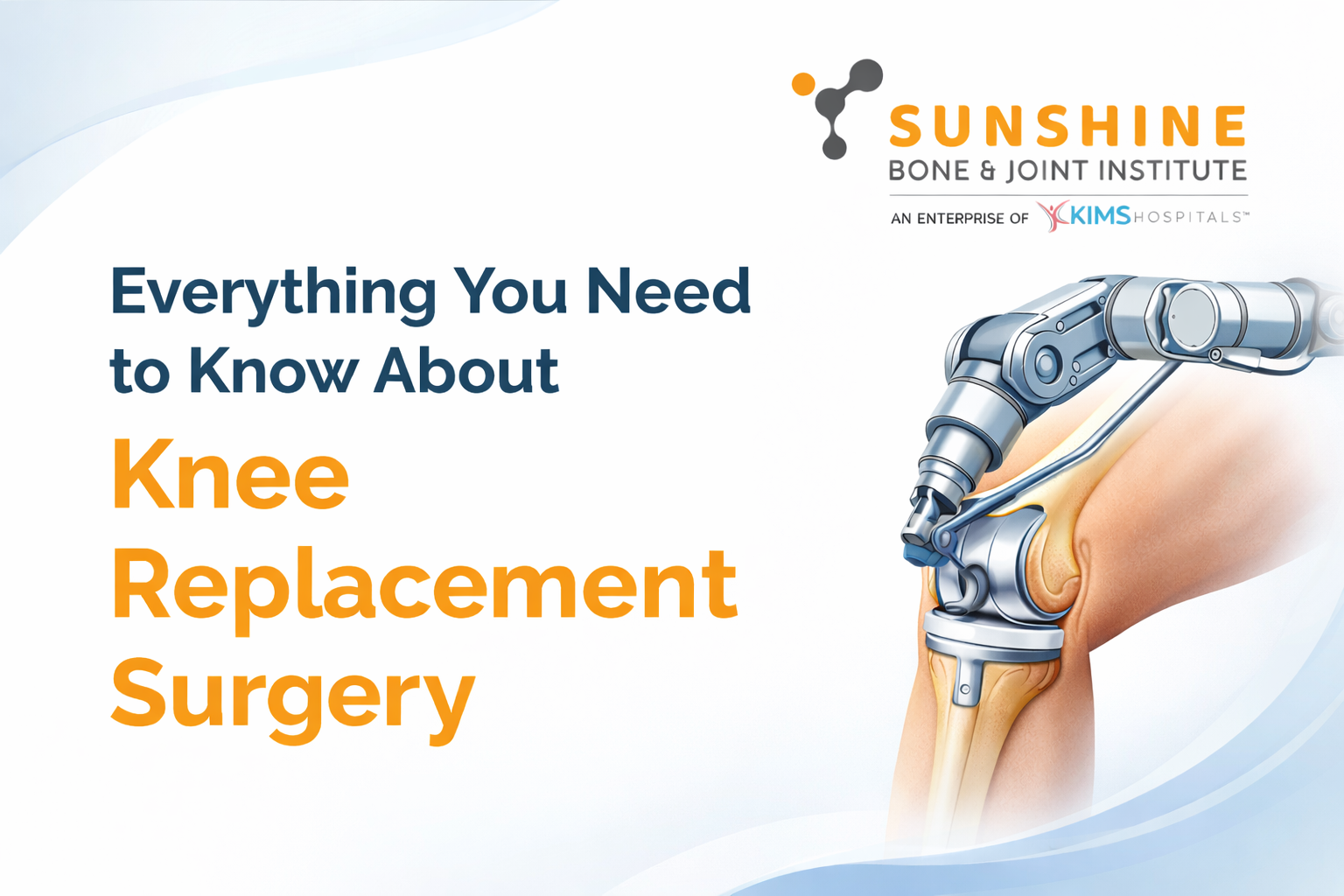
With robotic knee replacement surgery, a robotic arm is used to take high resolution CT scans of the affected knee and a 3D image of your joint is available for the surgeon to study closely. Robotic surgery is known for greater precision- which means the incision is smaller in size, surrounding tissue is not disturbed and affected joint parts are carefully and accurately excised out with specialised instruments. The prosthetic implants are then aligned in the right way so as to match your unique anatomy and then inserted into the joint space. Bone cuts are very precisely done and no extra tissue is removed or damaged. The robotic arm is used by a highly experienced orthopedic surgeon and DOES NOT move on its own.
Recovery After Robotic Knee Surgery in Hyderabad-
Recovery after robotic knee replacement surgery in Hyderabad involves a short hospital stay of about 2-3 days, followed by therapy and rehabilitation afterwards. There is less pain and chance of developing complications and you will heal and recover faster too.
Conclusion– Most people assume that orthopedic doctors suggest surgery even when there is no need for it. This is a wrong assumption, as surgery is only offered when all other avenues of treatment have been explored but provide no relief whatsoever. Call our orthopedic specialists at SBJI, as they can perform robotic knee replacement surgery in Hyderabad- efficiently and effectively. If you have been searching for the ‘best robotic knee replacement surgery near me’ then walk into our hospital today, for a consultation!
Frequently Asked Questions
Knee replacement surgery involves removing damaged or worn joint surfaces and replacing them with artificial components made of metal, ceramic, or plastic. This procedure aims to relieve chronic pain, restore joint alignment, and improve mobility for patients whose knees no longer function well due to arthritis or injury.
Candidates are typically patients with severe osteoarthritis, rheumatoid arthritis, or significant joint injury who experience persistent pain, swelling, stiffness, and limited movement that doesn’t improve with medications, physiotherapy, or lifestyle changes. Age alone is not a limiting factor; suitability is based on overall health, activity level, and severity of joint damage.
There are three main types: total knee replacement, where the entire joint is replaced; partial knee replacement, which targets only the damaged compartment; and minimally invasive procedures that use smaller incisions for faster recovery. The choice depends on the extent of joint damage, patient age, activity level, and surgeon assessment.
Recovery involves early mobilization, guided physiotherapy, and gradual weight-bearing exercises. Most patients can resume daily activities within 6–12 weeks, though full strength and flexibility may take several months. Pain management, wound care, and adherence to rehabilitation exercises are key to successful outcomes.
The benefits include significant pain relief, improved mobility, and a better overall quality of life. Risks, though uncommon, can include infection, blood clots, stiffness, or issues with the implant over time. Careful surgical technique, post-operative care, and following rehabilitation guidelines help minimize these risks.