

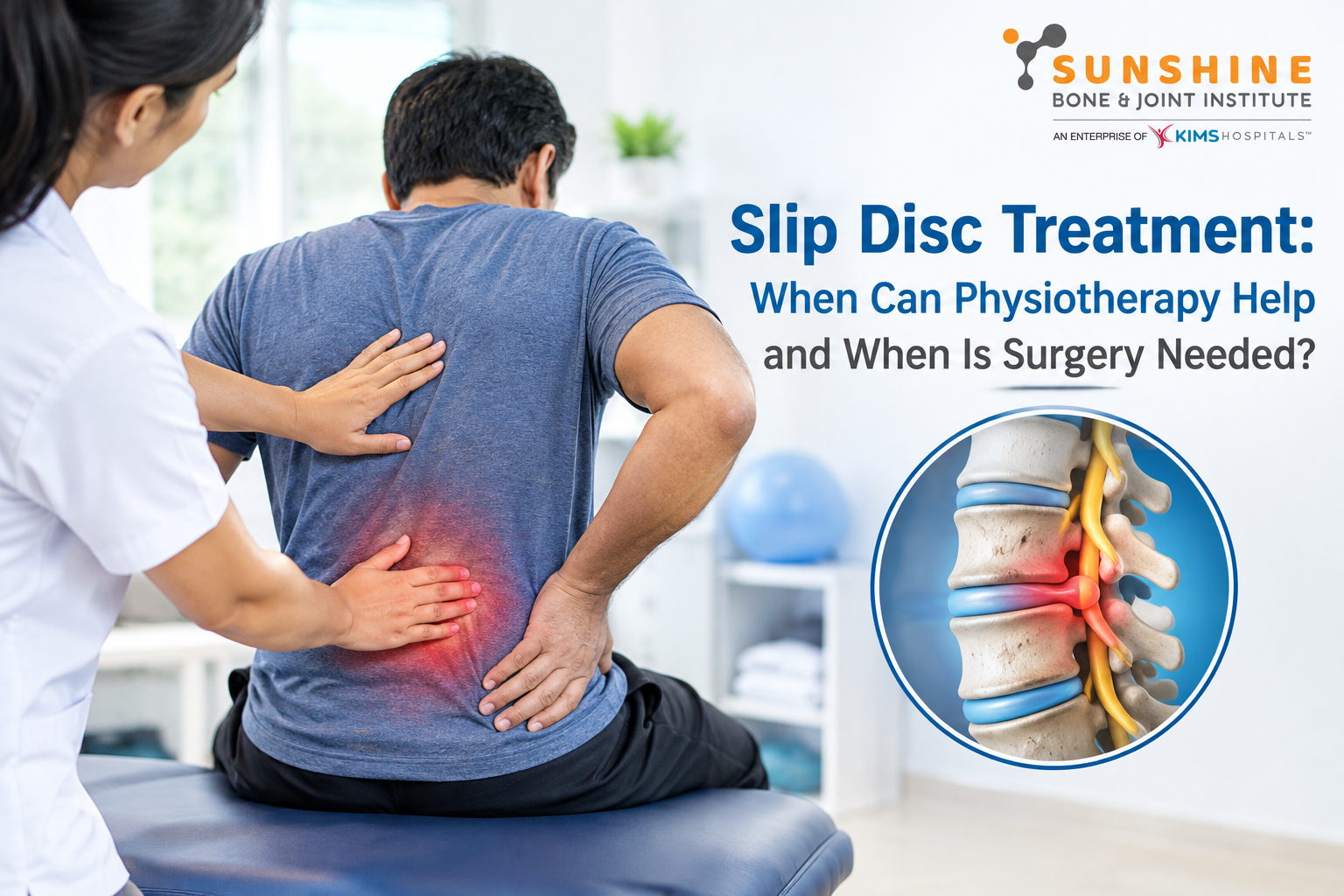
Slip Disc Treatment: When Can Physiotherapy Help and When Is Surgery Needed?
A slip disc, also known as a herniated or prolapsed disc is when the connective disc like tissue between the vertebrae in your spine slip out of their normal orientation. These discs are softer and mainly function as shock absorbers and help you move the spine in different ways without friction- like bend, twist or otherwise. With advancing age, the connective tissue wears down but if you have a traumatic fall, or twist your back awkwardly, then you may have to deal with a herniated disc and need specialised Slip Disc Treatment Without Surgery, in moderate cases.
The good news is most people respond really well to conservative treatments involving regular physiotherapy.
Causes of Slip Disc
These are some of the well known causes for a slip disc to develop-
- Wear and tear associated with increasing age can reduce hydration in the discs- making them less flexible than before and more prone to getting damaged.
- If you lift heavy objects in the wrong way and strain your back.
- If you have to twist your back suddenly.
- Physical strain or repetitive overuse can lead to injury.
- If you are overweight or obese, then the spine is under more pressure than usual.
- Poor posture for prolonged hours in a day.
- If you have falls or sports injuries.
- If you smoke regularly, it can affect the long term health of the vertebral discs.
Symptoms of Slip Disc
Your symptoms depend on where along the spine the disc slipped out and if it is pressing against a nerve. Some symptoms you may hence observe include-
- Pain in the lower back or neck
- You may have symptoms of sciatica- pian that spreads down the sciatic nerve due to it being pinched.
- Neuropathy- in the form of tingling, numbness or other vague sensations may show up.
- You may have a hard time standing or moving around like normal.
If you notice a sudden decrease in mobility with greater pain, urinary or bowel incontinence, numbness in the groin or inner thigh, or your gait changes- please talk to a specialist immediately, without any delay, as these symptoms indicate nerve compression. You may need to get evaluated for Slip Disc Surgery Hyderabad in these rare instances.
Diagnosis and Treatment of Slip Disc
A herniated disc can be diagnosed with a physical exam in most cases- where the physician will ask you to raise your leg and put it back. This action may cause pain and indicate an issue. They will also do a neurological exam to check sensory and reflex pathways. Imaging in the form of MRI, X-rays, CT scans or EMG or electromyelogram can point to the exact location and severity of issues in the spine.
Exercises include one to strengthen the core, stretch the spinal muscles gently, correct your posture, and help you move about in the right way respectively. Our therapists will also give you recommendations to make ergonomic changes in your hose and office space to reduce long term strain.
You will mostly respond well to physiotherapy if pain is moderate and localised, there is no muscle weakness or nerve damage and your symptoms seem to get better with painkillers or rest or a combination of both.
Conclusion
Surgery is only recommended as a last resort, if Slip Disc Physiotherapy Hyderabad fails to help you or if your symptoms get worse with medication, there is pronounced nerve compression on imaging and bladder or bowel control is lost. This is an emergency and you will need surgery immediately, to prevent other complications from arising.
Most surgeries are minimally invasive like a microdiscectomy- the injured part of the disc is taken out. Severe injuries may demand an open spinal surgical approach.
Whatever may be the case, our specialists will help ensure you can regain mobility and control in your life. Talk to us at at +91 8008102103 to learn more!
Frequently Asked Questions
A slipped disc causes back or neck pain, depending on the affected spinal region. When the disc presses on a nerve, symptoms include radiating pain into the arms or legs, tingling, numbness and muscle weakness. Severe nerve compression causes difficulty walking or loss of bladder or bowel control, requiring immediate medical assessment.
Physiotherapy helps manage a slipped disc by reducing pain, improving spinal mobility and strengthening the muscles that support the spine. Treatment includes guided exercises, posture correction, movement training and activity modification. A physiotherapist tailors the programme to the affected spinal region, symptoms and functional limitations following clinical assessment.
Yes, many slipped disc cases improve with non-surgical treatment. Management includes prescribed pain medication, activity modification and physiotherapy to restore movement and function. Surgery is considered when symptoms persist despite appropriate conservative treatment, nerve compression causes progressive weakness, or significant neurological complications develop. Treatment decisions depend on clinical examination and imaging findings.
Surgery is considered when persistent pain significantly limits daily activities despite non-surgical treatment, or when nerve compression causes progressive muscle weakness. Procedures such as discectomy remove the portion of the disc pressing on a nerve. New bladder or bowel dysfunction, numbness around the groin or rapidly progressing leg weakness require emergency assessment.
SBJI Hospital in Hyderabad provides evaluation and treatment for slipped discs, including clinical assessment, diagnostic imaging, physiotherapy and surgical consultation when indicated. The treatment plan depends on the affected spinal region, severity of nerve compression and response to non-surgical care. Patients seeking Slip Disc Treatment in Hyderabad should undergo specialist evaluation to determine the appropriate approach.