

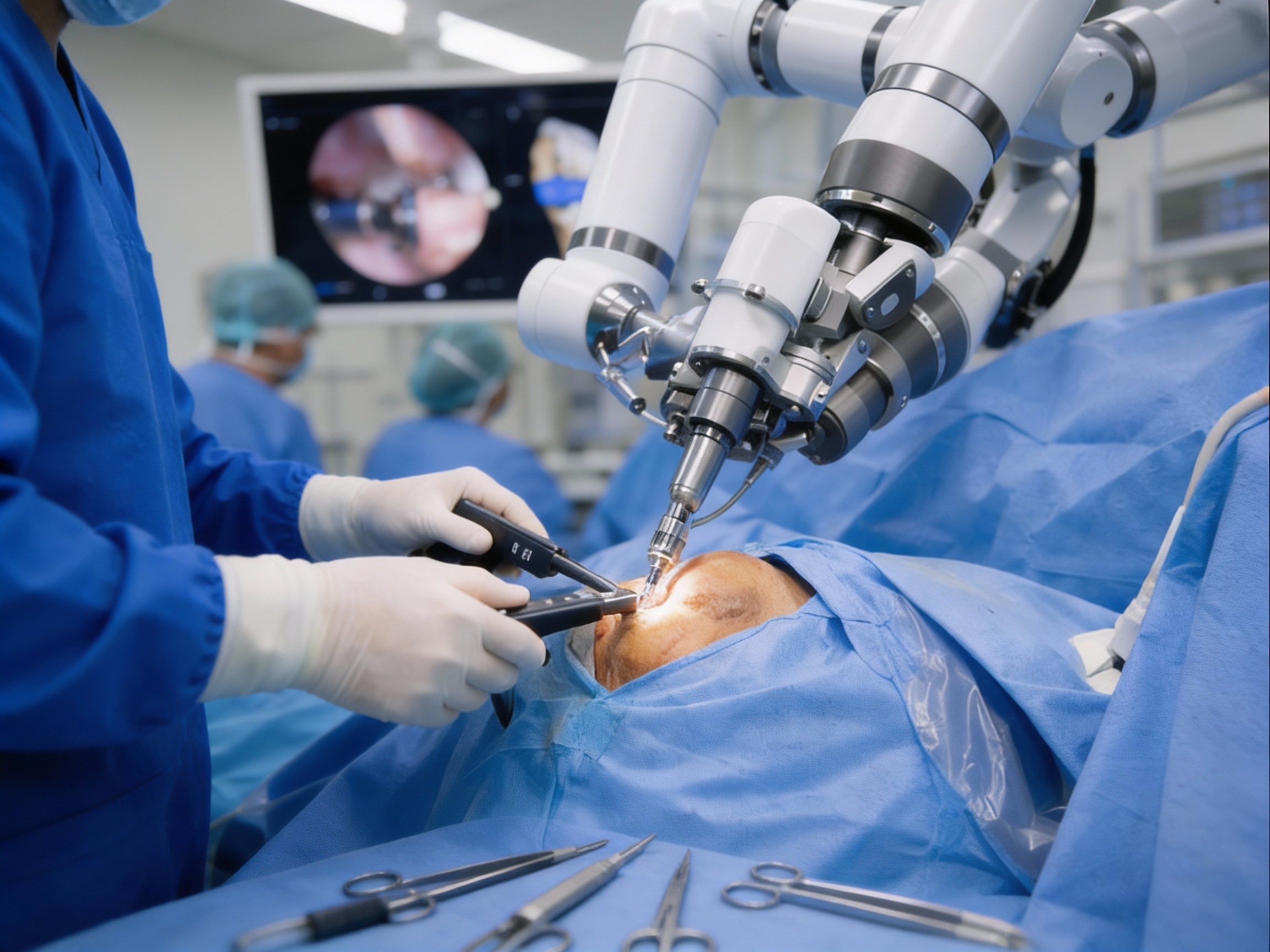
Why More Surgeons Are Switching to Robotic Joint Replacement
Millions of individuals all over the world, including in India suffer from life altering joint disease or related issues which can become a chronic source of severe pain and stiffness in the long term. Conventional modes of treatment are initially preferred- as they use painkillers, physiotherapy and injections in slightly more severe cases. Surgery is only recommended when all modes of treatment have failed to provide any relief. Robotic joint replacement surgery is a great way to ensure that you begin to move forward in life, without the risk of too many unwanted complications after the procedure is done.
What Is Robotic Joint Replacement?
Orthopedic joint replacement has come a long way in the last decade- the emphasis has shifted from long hospital stays to shorter recovery times now, where people go home within a week or even less. The focus is on improving accuracy, reducing future dislocations and helping patients heal sooner, with better planned surgery that is highly personalised. Robotic orthopedic surgery is a great step in that direction, as a cutting edge robotic instrument with a finely tuned arm plays the assistant to a highly experienced surgeon- who understands how human anatomy and physics work and also knows how to use the robot to play to their advantage.
How Robotic Joint Replacement Works-
The robot is first used to develop a detailed 3D image of the patient’s joint, using a series of high-resolution CT scans. During the procedure, special pins are used by the surgeon to help map out the part of the bone that needs to be incised. It also ensures that the incisions made are precisely located in only the necessary areas, so that damaged tissue can be removed. The pins also act as a boundary of sorts, to protect surrounding healthy tissue. The prosthetic components are then oriented in the right way and placed within the joint socket. The robotic arm is controlled very precisely by the surgeon, with a very low margin of error being present during joint placement, to prevent any issues later on.
The robotic system provides real time imaging and feedback to the surgeon, so the joint components can be placed in the best way to suit your unique anatomy. This ensures greater accuracy and a more natural feeling when using the joint. There is also greater stability for safer joint function.
Advantages Of Robotic-Assisted Joint Replacement-
Some of the most well known advantages of using robotic orthopedic joint replacement surgery include-
- Shorter hospital stay after the procedure is done.
- Reduced post surgery bleeding or blood loss.
- The incisions used are much smaller in size- which means the scars won’t be too noticeable, once you have healed.
- Since you begin physical therapy almost immediately, there is lower risk of developing blood clots.
- The 3D model of your joint that the robot prepares ensures that the joint components are placed with great accuracy and that your anatomy is respected.
Conclusion– SBJI is one of the top orthopedic hospitals for robotic surgery as we have specialists who have undergone rigorous training, to ensure that they can use the robotic arm in the right way. It is however important to note that since the robotic instrument is expensive and the expertise demanded from a surgeon is much higher, the procedure itself will cost more than traditional joint replacement surgery. Not all hospitals will be able to afford such equipment either, which means its availability is limited to Tier 1 cities at present. We think it is a great advantage for Hyderabad in general, as we hope to cater to a variety of orthopedic needs that patients will have- now and in the future. So, call us for a consultation today, if better joint health is a health goal you are working towards, this new year!
Frequently Asked Questions
Robotic joint replacement uses advanced robotic systems to assist surgeons in planning and performing procedures such as knee or hip replacements with greater accuracy. The robot supports the surgeon but does not operate independently.
Surgeons are switching to robotic systems because they offer enhanced precision, real-time data, and improved implant positioning. These benefits can lead to more consistent surgical outcomes and higher patient satisfaction.
Robotic systems create detailed 3D models of the patient’s joint, allowing surgeons to plan the procedure in advance. During surgery, real-time feedback helps ensure accurate bone cuts and implant placement.
Yes. Patients may experience less pain, reduced blood loss, smaller incisions, faster recovery, and improved joint function due to the precision offered by robotic assistance.
Challenges include higher costs, learning curves for surgeons, and limited availability in some hospitals. However, many surgeons feel the long-term benefits outweigh these initial hurdles.